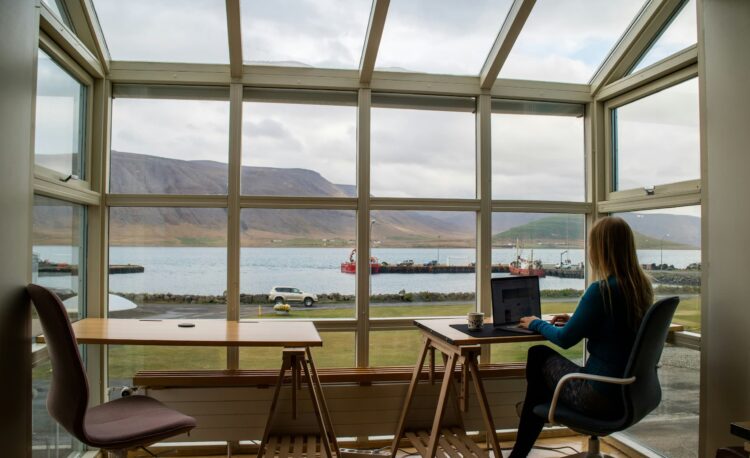
The pandemic changed everything about how we work. Some companies jumped on remote work immediately. Others are still dragging employees back to their desks. This article breaks down what actually works and what doesn’t, so you can figure out what’s right for you.
Working From Home: What It’s Really Like
About 29% of work happens from home these days. That’s not counting people who are hybrid. We’re talking fully remote folks here.
Remote workers get 51 more productive minutes each day than office workers. Over a year, that’s 62 hours. That’s almost two full work weeks you’re getting back just from avoiding interruptions. You know those coworkers who stop by your desk “for a quick question” that turns into a 30-minute conversation? Yeah, those don’t happen at home.
The commute savings are huge. We’re talking 72 minutes a day for the average person. If you live in a big city, you know what that means. You’re saving 10 hours a week—time you used to spend sitting in traffic or packed into a subway car. That’s time you can spend exercising, sleeping more, or actually seeing your family.
The financial piece is real. No more spending $15 on lunch because you forgot to pack one. No gas. No car maintenance from all that driving. No parking fees. Companies save money too, though they don’t always pass those savings on to employees.
Remote work also opens up who you can work with. You’re not stuck with whoever lives in your city. A team can span three time zones without anyone having to move. Your professional network grows beyond your immediate area. Studies show remote workers are more satisfied with their jobs overall. When you have flexibility, you tend to stick around longer.
But it’s not all sunshine. About 30% of remote workers struggle with collaboration. Video calls are fine for updates, but they’re not the same as being in the same room. You miss those moments when you overhear someone mention a problem you’ve already solved. More than half of fully remote workers worry about feeling isolated from their coworkers.
Then there’s the tech issue. Your internet crashes. Your laptop freezes. The dog won’t stop barking during your presentation. You’re on your own to fix it.
Here’s the thing nobody talks about enough: nearly half of remote workers say work bleeds into their personal life too much. Your office is your bedroom. Your conference room is your kitchen table. You find yourself answering emails at 9 PM because the computer is sitting right there. I know someone who literally built a wall in her apartment just so she could physically “leave” work. That tells you something.

Why Offices Still Matter
Stanford did this study that found people working together in the same space were 50% more effective than people working alone. That’s a big gap. Business leaders agree—86% of them say their biggest failures came from teams not collaborating well enough.
When you watch people in an office, they spend almost half their time—42%—working with other people. Not in scheduled meetings. Just talking. Asking quick questions. Getting feedback on the spot. You can’t replicate that on Slack. About 87% of employees say the office is important for building team relationships.
MIT researchers found something fascinating. When people sit close together physically, they’re three times more likely to collaborate well. They produce more papers, more patents, more ideas. There’s something about being in the same room that makes ideas flow differently. Someone draws something on a whiteboard. Another person adds to it. Before you know it, you’ve solved a problem that seemed impossible an hour ago. Zoom doesn’t capture that energy.
Some people need the structure. If you’ve got kids at home, or roommates who don’t respect your work time, or you just can’t focus with your laundry staring at you, an office helps. The equipment works. IT support is down the hall. The internet doesn’t mysteriously die right before your big presentation.
But offices have some serious problems. Your hiring pool shrinks to people who live nearby or want to relocate for the job. Only 19% of job seekers want to work in an office full-time now. Half want hybrid. A quarter want fully remote. Those are rough numbers if you’re a company trying to hire.
The commute wears people down. Add in rigid 9-to-5 hours, and people’s personal lives suffer. The stress builds up. Here’s something weird: 49% of people who went back to the office full-time after working remotely say their biggest struggle is staying motivated and feeling connected to their team. That’s ironic, right? The whole point of the office is supposed to be connection.
Which One Should You Pick?
Some careers need you there in person. If you’re constantly brainstorming with teammates or your job requires face-to-face client meetings, the office probably makes sense. But if you need long stretches of uninterrupted time to focus, or if your personal life demands flexibility, remote work might be your answer.